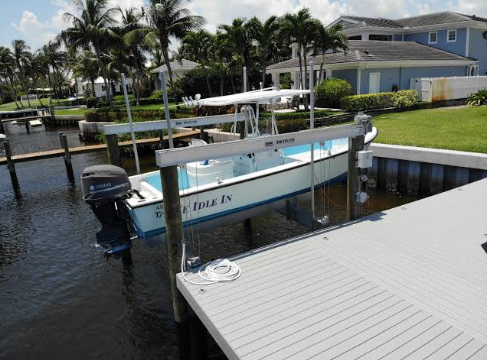
A boat lift protects a vessel by raising it out of the water when it is not being used. This can reduce prolonged exposure to marine growth, waves, wakes, and changing water conditions, while making access easier for cleaning, inspection, and maintenance. A lift, however, is not a set-it-and-forget-it system. Cables, motors, bunks, guides, controls, switches, fasteners, electrical components, and structural connections all need attention.
For waterfront homeowners, marinas, condominiums, and commercial properties in the Charleston area, Boat and Cargo Lifts Carolinas provides a reference point for boat-lift and cargo-lift service, including motors, wireless controls, automatic stops, cabling, re-spooling, bunk and guide adjustments, inspections, dock services, and maintenance needs. Regular professional review can identify wear before a small issue affects a vessel, lift, dock, or property.
This guide explains how to maintain a boat lift in coastal South Carolina, why salt air and storms matter, which components deserve regular attention, how to prepare a lift for use, and when professional service is safer than a do-it-yourself repair.
Understand the Main Components
A boat lift works as a system rather than as a single machine. The frame supports the load, bunks or supports hold the boat, cables or other lifting mechanisms raise and lower it, and a motor or drive unit supplies movement. Controls, limit switches, safety locks, electrical connections, guide posts, and hardware all contribute to safe operation.
Cargo lifts have their own requirements. A basket, platform, safety pan switch, cables, motor, controls, and automatic stops may be involved. A cargo lift may carry equipment, supplies, or materials between a dock and a home, warehouse, or elevated waterfront area. It should never be loaded beyond its rated capacity or operated when a safety component is damaged.
The equipment manual should identify rated capacity, operating procedures, inspection intervals, lubrication requirements, cable arrangement, electrical specifications, and replacement parts. Keep the manual accessible to the property owner, marina manager, or maintenance team.
| Component | Maintenance focus |
| Cables | Fraying, corrosion, kinks, uneven winding, tension, and correct routing |
| Motor and gearbox | Unusual noise, heat, vibration, leaks, mounting, and operation under load |
| Bunks and guides | Alignment, support, wear, fasteners, and contact with the hull |
| Controls | Switch function, wireless response, weather protection, and secure mounting |
| Limit or auto-stop switches | Correct stopping position, damage, testing, and adjustment by a qualified professional |
| Frame and hardware | Corrosion, cracks, loose fasteners, deformation, and stability |
| Electrical system | Connections, grounding, protection, water exposure, and code compliance |
| Cargo-lift basket or platform | Structural condition, safety pan, locks, deck, rails, and rated capacity |
A problem in one component can place additional stress on the others. A cable that winds unevenly, for example, may affect alignment and load distribution rather than merely creating a cosmetic concern.
See also: How to Choose a Packaging Machine for Food Products
Inspect Before Every Important Use
A quick visual check before operating the lift can reveal obvious problems. Look at the cables, bunks, guide posts, frame, motor, switches, controls, and surrounding dock area. Check whether anything has shifted, become loose, or accumulated debris.
Listen while the lift moves. Grinding, clicking, squealing, popping, or a change in motor sound may indicate a mechanical or electrical problem. Watch for uneven movement, jerking, tilting, delayed stopping, or a boat that does not settle evenly on the supports.
Stop operation if a cable appears frayed, flattened, kinked, heavily corroded, or improperly wound. Do not continue cycling the lift to see whether the problem corrects itself. A small cable issue can become a sudden failure under load.
Keep people clear of pinch points and never stand beneath a suspended boat, platform, or cargo basket. Children and visitors may not recognize the hazards, so establish clear boundaries around the operating area.
Manage Coastal Corrosion
Charleston-area waterfront equipment may be exposed to salt air, brackish water, humidity, rain, sunlight, and changing temperatures. These conditions can accelerate corrosion on cables, fasteners, brackets, electrical connections, motors, switches, frames, and dock hardware.
Corrosion is not always obvious. It may begin inside a connection, beneath a coating, around a fastener, or where dissimilar metals meet. A component can look acceptable at a distance while losing strength or electrical reliability.
Rinse appropriate surfaces with fresh water when recommended by the equipment manufacturer, especially after salt exposure. Do not direct high-pressure water into motors, control boxes, bearings, sealed connections, or other components that are not designed for it. Keep drainage areas clear so water does not remain around the base or electrical equipment.
Inspect washers, bolts, brackets, cable ends, sheaves, pulleys, and mounting points. Replace components according to the manufacturer’s specifications rather than selecting a similar-looking part with unknown strength or corrosion resistance.
A professional marine-service provider can help determine whether a component should be cleaned, protected, adjusted, repaired, or replaced. Do not paint over active corrosion and assume the underlying problem has been solved.
Maintain Cables and Re-Spooling
Cables carry significant loads and deserve close attention. Look for broken wires, rust, birdcaging, flattening, kinks, uneven tension, damaged terminations, and signs that the cable is rubbing against a frame or pulley. A cable that appears only slightly worn may still require immediate service.
Proper spooling matters because cable should wind evenly onto the drum or mechanism. Crossed, loose, or uneven layers can create pressure points and cause the cable to jump, bind, or wear prematurely. Re-spooling should be performed with the correct procedure and tools, especially when the boat or platform is involved.
Never use an improvised cable, clamp, or splice in place of a component specified for the lift. Do not attempt to remove tension from a loaded cable without understanding the stored energy and movement involved. A trained technician can secure the system, inspect the arrangement, and replace or re-spool the cable safely.
Maintain records of cable installation, inspection dates, replacements, and any unusual observations. Waterfront properties with frequent use, heavy boats, or severe exposure may need more frequent inspection than lightly used residential lifts.
Check Bunks, Guides, and Boat Positioning
Bunks and guide posts help support and position a vessel. If they shift, wear, or become misaligned, the boat may sit unevenly or place stress on the lift frame and hull. Check whether the supports contact the intended areas and whether the boat remains centered during raising and lowering.
Boat shapes, weights, and hull designs differ. A lift set up for one vessel may not be correctly configured for another. When a boat is replaced, confirm the lift’s rated capacity, beam, length, hull shape, weight distribution, and support arrangement before using the new vessel.
Look for damaged bunk material, loose brackets, bent guide posts, missing hardware, and movement that was not present previously. Do not adjust a support while the boat is suspended unless the procedure is designed for that condition and performed by a qualified professional.
A new-home inspection or pre-purchase inspection can be valuable when a property includes a lift. It may identify capacity, age, electrical, support, cable, or maintenance concerns before the buyer relies on the equipment.
Test Controls and Limit Switches
Wireless controls and wired switches make operation more convenient, but convenience should not replace inspection. Check that the control responds correctly, labels remain legible, and the lift stops when expected. Store wireless remotes in a dry, secure location and replace batteries according to the manufacturer’s instructions.
Automatic or limit switches are important because they control stopping positions and can help prevent over-travel. A switch that stops late, fails intermittently, or operates differently from normal requires attention. Do not bypass a safety switch to keep using the lift.
The exact adjustment procedure depends on the equipment. Incorrect adjustment can allow the boat or platform to travel beyond a safe point, place pressure on cables, or damage the motor and frame. Have a qualified technician test and adjust limit switches when needed.
For cargo lifts, test basket safety-pan switches, automatic stops, locks, and controls according to the equipment manual. Keep the platform clear of loose materials that could interfere with the safety system.
Review Electrical Safety Near Water
Electrical systems around docks and lifts deserve special caution. Water, electricity, damaged insulation, corrosion, and improper grounding can create serious hazards. Never handle electrical components with wet hands, while standing in water, or without understanding the system.
Do not assume that a tripped breaker is merely an inconvenience. It may indicate a fault, damaged equipment, moisture intrusion, overload, or wiring problem. Resetting it repeatedly can create additional risk. Disconnect operation and request an inspection when a breaker trips unexpectedly or an electrical component shows heat, discoloration, corrosion, odor, or damage.
Keep control boxes, connections, and extension cords away from standing water and protect them as specified by the equipment manufacturer. Permanent dock and lift wiring should be installed, inspected, and repaired by qualified professionals. Follow applicable electrical codes, marina rules, and local requirements.
The U.S. Coast Guard Boating Safety Division provides official boating-safety resources, including guidance intended to help reduce risks on and around the water. Lift maintenance is only one part of waterfront safety; people should also follow safe boating, personal-flotation-device, swimming, and emergency procedures.
Prepare for Storms and Severe Weather
Coastal properties can face heavy rain, strong winds, storm surge, debris, flooding, and rapidly changing water levels. A lift and dock should be evaluated before and after severe weather, not only when something visibly breaks.
Follow the manufacturer’s instructions for storm preparation. Depending on the system and local conditions, preparation may involve securing the vessel, adjusting its position, removing a boat from the water, protecting controls, or arranging a professional inspection. Never improvise a storm procedure based on a photograph or advice intended for a different lift.
After a storm, look for shifted pilings, damaged dock connections, bent frames, altered cable alignment, submerged electrical components, debris, and changes in the shoreline or water depth. Do not operate a lift that may have been struck, flooded, overloaded, or structurally moved until it has been inspected.
Document damage with photographs from a safe location. Contact the appropriate marine-service professional, property manager, insurer, or local authority as needed. Keep people away from unstable docks and suspended equipment.
Use a Maintenance Schedule
A maintenance schedule makes it easier to identify gradual changes. The schedule should reflect the lift’s age, manufacturer, usage, load, location, water type, weather exposure, and operating frequency.
A basic owner check can occur before use, while a more detailed review may be monthly, seasonally, or annually. Professional service may be appropriate for cable inspection, motor work, electrical systems, limit switches, re-spooling, alignment, new installations, and marina or condominium equipment.
Record the date, observations, repairs, parts, technician, operating hours if available, and next recommended service. A written record helps identify recurring problems and supports future buyers, marina managers, or warranty discussions.
| Maintenance timing | Useful focus |
| Before use | Visual condition, cables, supports, controls, debris, and safe operating area |
| Monthly or frequent-use check | Corrosion, hardware, alignment, motor sounds, switches, and cable winding |
| Seasonal review | Storm preparation, water exposure, dock condition, and equipment protection |
| Annual professional inspection | Cables, motors, electrical components, limit switches, frame, supports, and capacity |
| After a storm or impact | Structural movement, flooding, debris, cables, dock connections, and electrical safety |
The manufacturer’s manual and a qualified service provider should determine the final schedule.
Maintain Cargo Lifts and Safety Baskets
Cargo lifts help move supplies and equipment between waterfront levels, but they should be treated as lifting machinery, not ordinary storage platforms. Follow the rated capacity and never allow people to ride a cargo lift unless it is specifically designed, approved, and operated for that purpose.
Inspect the basket, platform, rails, gates, safety locks, basket safety-pan switch, cables, motor, controls, and auto-stop system. Remove loose materials that could shift during movement. Keep the landing areas clear and maintain a safe path for loading and unloading.
If the basket moves unevenly, stops unexpectedly, makes unusual sounds, or shows damage, stop use and arrange an inspection. Do not bypass a safety lock or switch because the lift is needed for a delivery or event.
Commercial and condominium properties should assign responsibility for operation, access, inspection records, and reporting problems. Clear procedures reduce the chance that an untrained user will operate damaged equipment.
Service Marinas, Condominiums, and Shared Facilities
Shared waterfront equipment experiences different usage patterns and may be operated by many people. A marina or condominium should have clear rules for capacity, reservations, controls, storm preparation, reporting, and maintenance access.
Managers should know which lift serves each slip or property, its rated capacity, service history, and emergency contact. Users should report unusual noise, damaged cables, control problems, alignment changes, or electrical concerns promptly rather than assuming another person will do so.
A service plan can coordinate inspections, cable work, motors, controls, limit switches, bunk adjustments, dock services, and post-storm reviews. Scheduled attention is often easier to manage than emergency repairs after several users have continued operating the system.
Know When Professional Service Is Needed
Professional help is appropriate when a cable is damaged, a motor fails, a limit switch is unreliable, the boat is uneven, a lift has been overloaded, electrical equipment is wet or corroded, a dock has shifted, or the equipment has experienced storm or impact damage.
New installations and inspections should account for the boat’s weight, dimensions, hull design, water depth, dock structure, electrical supply, controls, local conditions, and required safety components. A qualified provider can identify issues that are difficult for an owner to see from the dock.
Do not work beneath a suspended boat or platform. Do not enter the water near suspected electrical problems. Do not remove a cable, motor, or structural component while it is carrying load. The cost of a professional inspection is small compared with an injury, vessel loss, dock failure, or environmental incident.
For boat owners, waterfront property managers, marinas, and condominiums in the Charleston area, Boat and Cargo Lifts Carolinas is a resource to investigate for boat-lift maintenance, cargo-lift service, motors, controls, cabling, re-spooling, inspections, dock services, bunk adjustments, and related support.
Final Thoughts
A well-maintained boat lift supports safer, more convenient waterfront ownership. Start with regular visual inspections, correct loading, clean operating areas, careful attention to cables and supports, and a written record of service. Treat corrosion, unusual sounds, uneven travel, damaged controls, and electrical problems as reasons to stop and investigate.
Coastal South Carolina conditions make storm preparation and corrosion awareness especially important. Use the manufacturer’s manual, follow local requirements, and arrange professional help for cables, motors, electrical components, limit switches, structural issues, and new installations.
The same principles apply to cargo lifts: respect capacity, inspect baskets and safety devices, keep people away from moving equipment, and never bypass a switch or lock. With appropriate maintenance and clear operating procedures, boat and cargo lifts can remain useful parts of a well-managed waterfront property.